IATF 16949 certification tells you, the automotive buyer, that a rubber manufacturer runs a zero-defect quality system with full traceability from raw material batch to finished part. This matters for rubber manufacturing because material variability, curing parameters, and shelf life create risks generic quality systems cannot fully control. Aging resistance and curing consistency demand specialized process controls. Your practical concern: how to confirm that an "IATF 16949 rubber manufacturer" claim is real, current, and relevant to the parts you source. You need to check certification scope and validity to ensure your supplier meets these standards.
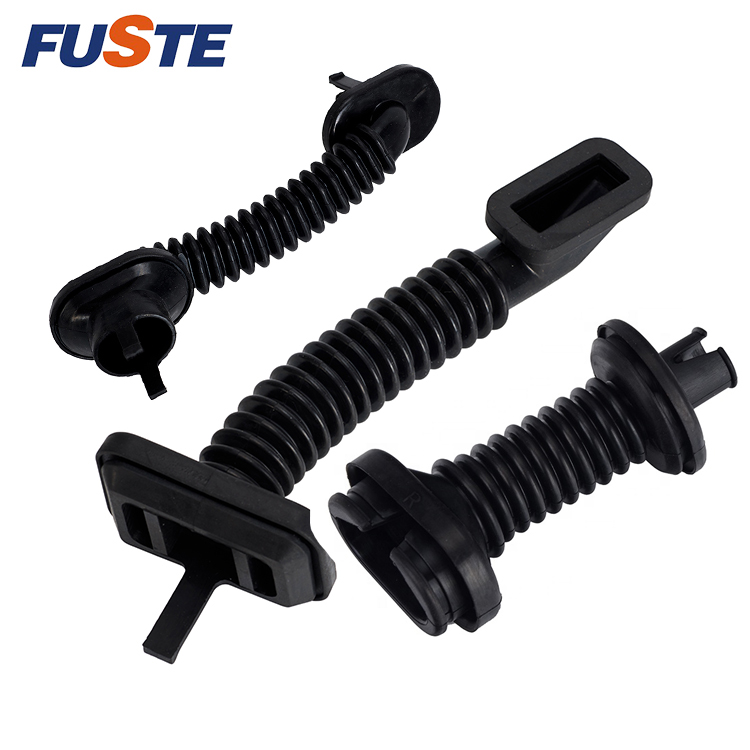
This certification is a mandatory quality system standard for automotive manufacturing. The standard centers on zero-defect manufacturing. It covers design, production, and servicing of automotive products. For a custom rubber manufacturer, this standard governs every production step. A custom rubber manufacturer must document raw material control through compound verification. Molding operations follow strict temperature and pressure parameters. Curing processes require precise timing. Finishing steps demand inspection and dimensional checks.
Your supplier needs complementary certifications alongside this automotive-grade quality system. Baseline quality management systems provide a management framework. Material classification standards specify grades for rubber parts in automotive systems. Food-contact compliance may apply when parts contact fluids. Environmental and safety compliance standards address material safety and flammability. Consider a certified rubber manufacturer that implements IATF 16949 as its core system. This manufacturer also holds additional certifications covering material safety and environmental compliance. These credentials support a complete automotive-grade quality system for custom molded rubber components. Many custom rubber manufacturers pursue these additional certifications.
Rubber manufacturing presents challenges that quality systems cannot fully address. Material variability is your first concern. Rubber compounds contain multiple ingredients including polymers, fillers, curatives, and accelerators. Small formulation changes affect part performance directly. Curing parameters create another risk layer. Temperature, pressure, and cure time interact. A deviation of a few degrees alters hardness, tensile strength, or compression set. Shelf life adds a third dimension of risk. Rubber compounds continue changing after production. Aging affects sealing force and dimensional stability. Any reliable custom rubber manufacturer understands these material risks.
These rubber manufacturing requirements demand specialized controls beyond basic systems. A generic quality system might not capture curing profiles or compound batch history. A certified supplier following this standard must document these variables. You need an IATF 16949 rubber manufacturer who follows the standard thoroughly. The certification ensures your custom rubber manufacturing partner meets automotive expectations. Your custom rubber manufacturing operation benefits from this structured defect prevention approach. For procurement professionals, this means fewer field failures and fewer costly recalls. Quality control becomes embedded in every rubber manufacturing step. This protection of OEM quality programs reduces supply chain risk substantially.
Every rubber part you receive must trace back to its raw material batch. This forms a core part of the IATF 16949 standard. You need to know the exact compound formulation for each production run. You also need the production date, the operator who molded the part, and all test results from that batch. This level of detail protects your supply chain from quality surprises. This traceability demonstrates that a custom rubber manufacturer follows disciplined quality control throughout production.
Reliable custom rubber manufacturers follow industry-standard traceability guidelines. These guidelines set the industry standard for rubber manufacturing traceability. They require documenting each material lot entering the process. They also require tracking every parameter change during curing and finishing. When a field failure occurs, you can isolate affected parts quickly. You avoid recalling entire production lots. You replace only the parts from that specific batch and shift. You need a custom rubber manufacturer that follows these guidelines for complete protection.
Consider how this traceability works at a practical level. The compound batch number links to the raw material certificates. The molding press number and operator ID link to the production record. The cure time and temperature profile link to the part's final test result. This chain of evidence gives you complete visibility into your supplier's quality control. You gain confidence that each part meets your specifications. For custom rubber components, traceability also addresses shelf-life risks. You can track storage conditions and expiration dates. You confirm shipped parts remain within their usable window. This matters for sealing applications where aging affects performance. Traceability turns an abstract quality claim into a documented fact that protects your operations.
IATF 16949 requires your custom rubber products manufacturer to use Failure Mode and Effects Analysis. This tool identifies potential failures before they happen. The rubber manufacturing team examines each process step. They ask what could go wrong during mixing, molding, or curing. They assign a risk level based on severity, occurrence, and detection. They then implement controls to prevent those failures.
Process control documents every critical parameter in rubber manufacturing. Cure temperature, pressure, time, and compound viscosity all receive continuous monitoring. Control charts track these variables in real time. When a parameter drifts outside the acceptable range, the system alerts operators immediately. They can correct the issue before producing any defective parts. This proactive approach reduces defect escape risk for you.
Corrective action follows a structured methodology when problems occur. The team defines the problem, contains the issue, identifies the root cause, and implements permanent corrective actions. They verify that the fix works before closing the case. Your custom rubber manufacturing partner documents every step. You receive evidence that the supplier resolved the issue at its source.
These quality systems work together to protect your production reliability. FMEA prevents problems. Process control catches deviations. Corrective action fixes root causes permanently. This combination means fewer rejected parts for you. It also means fewer production line interruptions and fewer end-customer complaints. A certified supplier demonstrates this discipline through documented records at every stage. In custom rubber manufacturing, this layered approach ensures consistent output.
For this production environment, these systems address material variability and curing risks. Compound batches differ between lots. Process control adjusts parameters to maintain consistent output. FMEA identifies interactions between ingredients that could cause defects. Corrective action resolves formulation or process issues before they affect your parts. The resulting reliability improvement reduces your overall supply chain risk.
Advanced product quality planning is a structured framework your rubber supplier uses to plan quality before production begins. It maps every stage from design through launch. You receive a roadmap showing how the supplier will control each step of custom rubber manufacturing. This planning phase catches potential problems early. You avoid costly surprises during full production.
The production part approval process confirms your supplier can consistently meet specifications before full production starts. Your rubber supplier submits a PPAP package containing samples, test results, and dimensional reports. This package proves the manufacturing process produces parts that meet your requirements. The automotive core tools, including FMEA and control plans, support this submission. Most automotive OEMs request a specific submission level. A common approach follows this pattern:
The supplier notes that PPAP Levels 1 to 5 are supported, with Level 3 being the most common submission (warrant + samples + full supporting documents), while Level 5 on-site review is supported for high-risk programs.
Your supplier should provide PPAP documentation that matches your program's risk level. A custom rubber manufacturer with experience understands which level fits your application. The AIAG core tools framework guides this entire process. You gain confidence that your rubber manufacturing partner can deliver consistent quality at volume.
Change management records show how your supplier handles modifications to materials, processes, or equipment. Any change to a rubber compound or curing profile affects part performance. Your supplier must document each change, assess its impact, and notify you before implementation. These records prove your custom rubber manufacturer maintains discipline over time.
Control Plans serve as living documents that list every quality control checkpoint in production. They specify what gets measured, how often, and what limits apply. You can request these records during supplier audits. They demonstrate that quality control remains active after initial approval. A reliable rubber supplier updates Control Plans whenever processes change. This ongoing documentation protects your supply chain from undetected shifts in custom rubber manufacturing.
The only authoritative source for IATF 16949 certificate verification is the IATF Global Oversight registry at iatfglobaloversight.org. IATF maintains this centralized database specifically for buyers and OEMs to confirm certificate authenticity, status, and scope in real time.
Follow these steps to verify a supplier's certification:
Obtain the supplier's IATF certificate and locate the 6-to-7-digit certificate number printed on it.
Navigate to the official IATF Global Oversight registry.
Search the registry using the certificate number. This method is the most precise. You can also search by company name and location, but those are less unambiguous.
Cross-reference every field on the registry entry against the supplier's certificate document line by line.
Optionally perform secondary verification through the issuing Certification Body's own database. Examples include SGS and TÜV. This step catches update lags.
Confirm the certificate cycle details. The certificate has a 3-year validity with annual surveillance audits. Request the most recent surveillance audit summary from the supplier.
A genuine IATF 16949 rubber manufacturer will have a certificate number that you can verify using these steps. Check these fields when you compare the registry entry:
Field to Check
What to Look For
Red Flag If…
Certificate Number
Exact match with the supplier's document
Number does not exist or digits differ
Site Address
Must be the physical plant address
Address is corporate HQ only, not the factory
Certification Body
Must be an IATF-recognized CB (e.g., SGS, TÜV, BSI)
CB is unknown or not on the IATF list
Certificate Status
"Active" or "Valid"
Shows "Suspended," "Withdrawn," or "Expired"
Expiration Date
Within the current 3-year cycle
Date has passed with no renewal
IATF Logo
Globe logo with the registered "R" mark
Logo is missing or looks altered
You must also confirm the scope covers your specific parts. A reliable IATF 16949 rubber manufacturer will list "rubber parts manufacturing" or "molded rubber components" in their scope. Scope language that says "plastic injection molding" or "assembly only" does not cover rubber manufacturing. This is a critical check for buyers in automotive manufacturing. Ask the rubber supplier to show you the scope language from their certificate.
Consider a supplier that holds IATF 16949 certification and exports globally to demanding automotive markets. This global reach demonstrates their certification serves demanding automotive markets.
Certification alone does not guarantee real compliance. You must ask targeted audit questions during supplier qualification. These questions reveal whether the supplier follows the standard in daily practice.
Ask these questions to assess their quality system:
A reliable custom rubber manufacturer will answer these questions with documented evidence. They will show you traceability records from compound batch to finished part. They will present FMEA documents that address material variability and curing risks. They will demonstrate corrective action that resolves root causes permanently. They will provide change management records that show notification and approval. They will share Control Plans that list all quality control checkpoints. Other custom rubber manufacturers may not provide this level of detail.
The IATF requires annual surveillance audits to maintain certification. A supplier who passes these audits continues to meet the standard. But your own audit questions confirm that the supplier applies these practices to your specific custom rubber manufacturing needs. This verification process ensures consistency for your supply chain.
A certified supplier, for example, strictly implements the IATF 16949 quality management system. They follow industry-standard traceability guidelines. Their processes include continuous monitoring of cure temperature, pressure, and time. These practices confirm their commitment to real compliance, not just a certificate on the wall. This approach provides the consistency that buyers require.
Use these verification steps and audit questions to protect your supply chain. A certified supplier who passes these checks will deliver consistent, reliable parts for your custom rubber manufacturing operations.
Certification alone does not guarantee results. You must verify scope, validity, and documentation. Check the IATF database. Request PPAP records. Audit traceability practices. A certified supplier earns your trust through proof, not claims.
Build this verification into your supplier qualification checklist from the start. Ask every custom rubber manufacturer for evidence. Confirm their IATF certified status covers rubber manufacturing. Request their quality records. This discipline protects your production and secures your supply chain for the long term.
At Fuste Rubber, this transparent, audit-ready framework is how we operate daily. As an IATF 16949-certified custom rubber manufacturer in China, we welcome your scrutiny—whether that means verifying our certificate number on the IATF database, reviewing full PPAP Level 3 documentation, or auditing our compound-to-part traceability records.
Ready to benchmark your automotive rubber components against verifiable quality standards? Contact the engineering and quality team at Fuste today to review our compliance documentation or request a technical quote for your custom tooling.
The standard applies to automotive production and service parts. Your part must enter a vehicle program. Industrial or general-purpose rubber goods fall outside the scope. Ask your supplier to confirm the certificate scope lists rubber parts for automotive use.
A certificate runs for a three-year cycle. Your supplier must pass annual surveillance audits to keep it active. Request the latest audit summary each year. An expired or suspended certificate means you lose the quality guarantee.
Yes. IATF 16949 builds on ISO 9001 requirements. A certified supplier already meets the ISO 9001 foundation. You do not need to request both certificates separately. Check the IATF registry entry for the full scope.
Rubber compounds change with each batch. Curing depends on precise temperature, pressure, and time. Shelf life affects part performance after delivery. These variables demand tighter process control than many metal operations. A custom rubber manufacturer must document every batch and cure profile.
Check the scope language on the IATF registry entry. It must mention rubber parts or molded rubber components. A scope limited to assembly or plastic molding does not cover your order. Request written confirmation before you place production volume.




 Интернет Сервис


